Home › Sitework and Structural Concrete
We perform sitework and structural concrete for commercial and industrial projects across Brooklyn, NY. From equipment pads and retaining structures to piers, pedestals, and structural walls, our experienced crews deliver accurate layout, reinforcement, and placement on demanding jobsites.
Superior Concrete Brooklyn provides professional structural concrete throughout Brooklyn, NY, New York and the surrounding area. Our licensed, insured crew delivers safe, clean, on-time work with a free estimate before anything begins. Call (718) 313-3878 or request your free quote.
Sitework and structural concrete that fits Brooklyn properties
Structural concrete in Brooklyn is rarely a blank slate. Space is tight, lots are narrow, soil is mixed, and neighboring buildings are close. Superior Concrete Brooklyn builds structural concrete that works within those constraints and passes New York City inspections the first time.
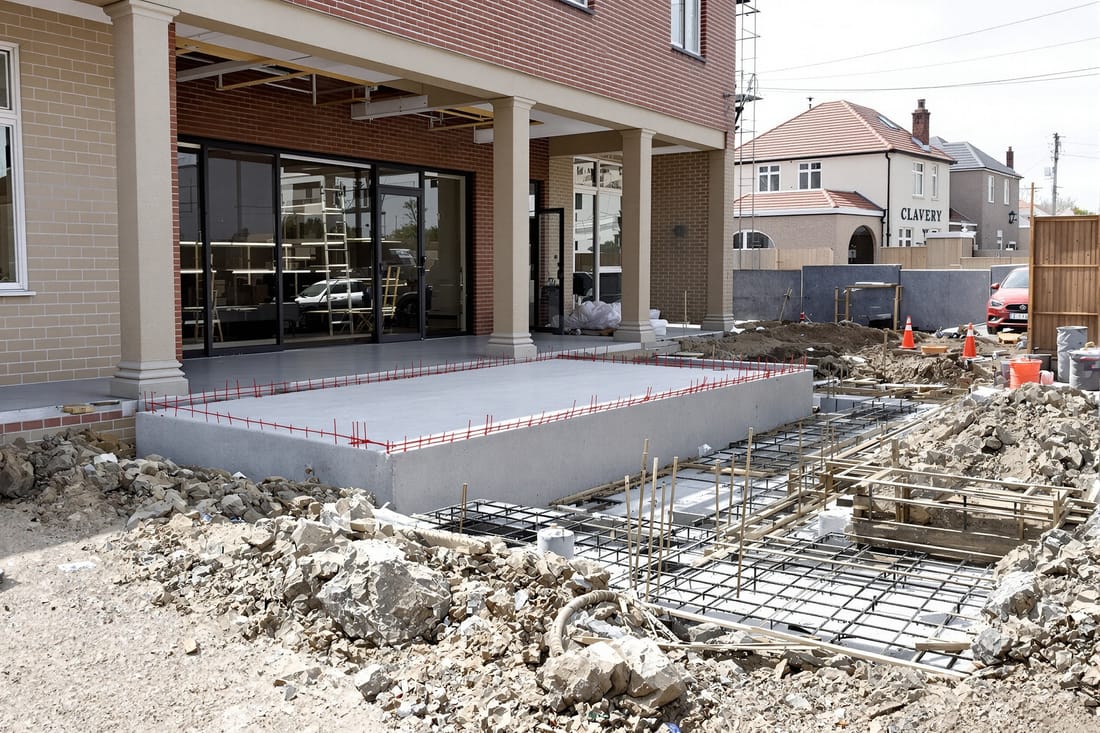
When we talk about structural concrete, we mean foundations, grade beams, slabs that carry building loads, retaining walls that hold back soil, and structural stairs or landings. Sitework comes first. That includes clearing and demo, excavation, rough grading, drainage layout, and preparing subgrades so the concrete can actually perform over decades instead of a few winters.
Every project starts with existing conditions. On a typical Brooklyn brownstone renovation, for example, we might shore interior walls, remove old rubble footings in sections, and install new reinforced concrete strip footings or underpinning without disturbing the neighbor’s building. For new construction or major additions, we coordinate with your architect or engineer to turn their structural details into a field-ready plan that matches site access, staging limits, and local code.
How we approach sitework on tight Brooklyn lots
Good structural concrete depends on what is underneath it. Our sitework team focuses on three main things: access, subgrade, and water.
Access: On a narrow street or shared driveway, we plan how material gets in and out so we do not block FDNY access or annoy every neighbor on the block. Sometimes that means smaller equipment like mini-excavators and skid steers, more hand work, and scheduling concrete trucks to avoid school drop-off or alternate-side parking hours.
Subgrade: Brooklyn soils can change from sand to fill to clay from one property to the next. We probe and inspect as we excavate, then follow the engineer’s bearing requirements. If we hit soft or trash fill, we may over-excavate and replace with compacted crushed stone or controlled fill. For slabs on grade, such as garage floors or ground-level commercial spaces, we install and compact a stone base, then add vapor barriers and insulation if specified.
Water: Poor drainage is one of the fastest ways to ruin structural concrete. During sitework we set rough grades to move surface water away from the building and into legal discharge points. We install footing drains, sump pits, and drain tile where engineered. On properties near the waterfront or with high groundwater, we plan for temporary dewatering during excavation and pour windows that avoid heavy rain, since wet trenches can collapse and weaken the base.
Our process for structural concrete foundations, slabs, and walls
Once sitework and subgrade prep are complete, Superior Concrete Brooklyn moves into structural forming and placing.
Layout and forming: We use survey control or engineer benchmarks to set footing locations, wall lines, and slab elevations. On row houses with party walls close by, we verify offsets so we do not encroach on neighboring property. We build wood or modular steel forms, braced to handle the concrete pressure and Brooklyn’s typical narrow working areas. For retaining walls or deep footings next to an existing building, we sometimes pour in phases and use needle beams or temporary shoring to keep everything stable.
Reinforcing: We install rebar cages and mats per the engineer’s schedule, including bar size, spacing, lap lengths, and hooks. Common elements include continuous rebar in footings, dowels tying walls to slabs, and heavy reinforcement at column pads or stair landings. Before any pour that requires it, we call for inspection from NYC Department of Buildings or the special inspector listed on your TR1 form so steel placement, forms, and subgrade get signed off.
Concrete placement: For most structural work in Brooklyn, we use ready-mix from local plants, typically 3,000 to 5,000 psi mixes, and add air entrainment or corrosion inhibitors if specified. On hard-to-reach backyards or roof decks, we use line pumps or boom pumps instead of trying to wheelbarrow loads through the house. During placement we vibrate walls and heavily reinforced sections to avoid voids around rebar. For slabs, we strike off, bull float, and, where required, use power trowels to achieve a flat, durable surface.
Curing and protection: Proper curing is what keeps a slab from cracking more than it should. We use curing compounds or wet curing methods, keep foot traffic off until the concrete reaches strength, and in colder months we protect with thermal blankets or enclosure and heat as needed. On structural elements that will carry early loads, such as column footings that support steel erection, we follow the engineer’s minimum strength requirements before removing forms or loading the concrete.
Permits, inspections, and NYC code considerations
Sitework and structural concrete in Brooklyn sit under New York City Building Code and zoning rules, so paperwork and inspections are part of every job. Superior Concrete Brooklyn works with your design professionals to keep that side moving.
Permits: Most structural concrete needs a DOB permit tied to approved drawings, especially if you are altering foundations, adding floor area, or changing occupancy. Your architect or engineer of record usually files these. We review the stamped structural drawings and details before work starts so what is drawn can actually be built on your lot. If we see conflicts, for example a footing detail that cannot fit between an existing sewer line and a property line, we flag it early for revision.
Inspections: For reinforced concrete, NYC typically requires special inspections for soil conditions, rebar, concrete placement, and sometimes masonry that sits on the concrete. We coordinate inspection timing, provide safe access, and keep accurate pour tickets and batch information. That documentation becomes part of the project record and matters when you later sell, refinance, or get a final Certificate of Occupancy.
Code and neighboring structures: Many Brooklyn buildings share party walls or sit inches apart. Underpinning or deep excavation often triggers monitoring requirements for adjacent structures. We follow the engineer’s sequence, use proper shoring, and limit daily excavation lengths when underpinning existing walls. This lowers the risk of settlement and DOB stop work orders, which can be costly and time consuming for owners.
Costs, options, and what to ask before you hire
Structural concrete is not a commodity service. Price depends on volume, rebar complexity, access, required shoring, inspection level, and schedule. A simple interior slab replacement that we can wheelbarrow to is very different from an underpinning job on a narrow lot with limited working hours.
Key cost drivers:
• Access and logistics: If we need pumps, street occupancy permits, night or weekend work, or extensive hand excavation, labor and equipment costs go up.
• Engineering and inspections: More complex structures need more detailed engineering, special inspections, and sometimes concrete testing cylinders, all of which add to the total.
• Site conditions: Bad fill, high groundwater, or hidden utilities can require extra excavation, stone, or redesign.
Options and durability: Where the design allows choices, we walk you through them. That might include thicker slabs in high load areas, integral footing and stem wall pours to reduce joints, higher strength mixes for garages or commercial spaces, or waterproofing systems for below-grade walls. For residential projects we often discuss where it is worth upgrading, such as better drainage or insulation under basement slabs that may later be finished space.
Before you hire any contractor for sitework and structural concrete in Brooklyn, you should ask for recent local projects, how they handle DOB inspections, whether they are comfortable working from engineered drawings, and what their plan is for protecting neighboring properties. Superior Concrete Brooklyn is prepared to answer those questions in detail, walk you through our process in plain language, and provide a clear scope so you know exactly what structural work you are paying for.