Home › Commercial Concrete Foundations and Footings
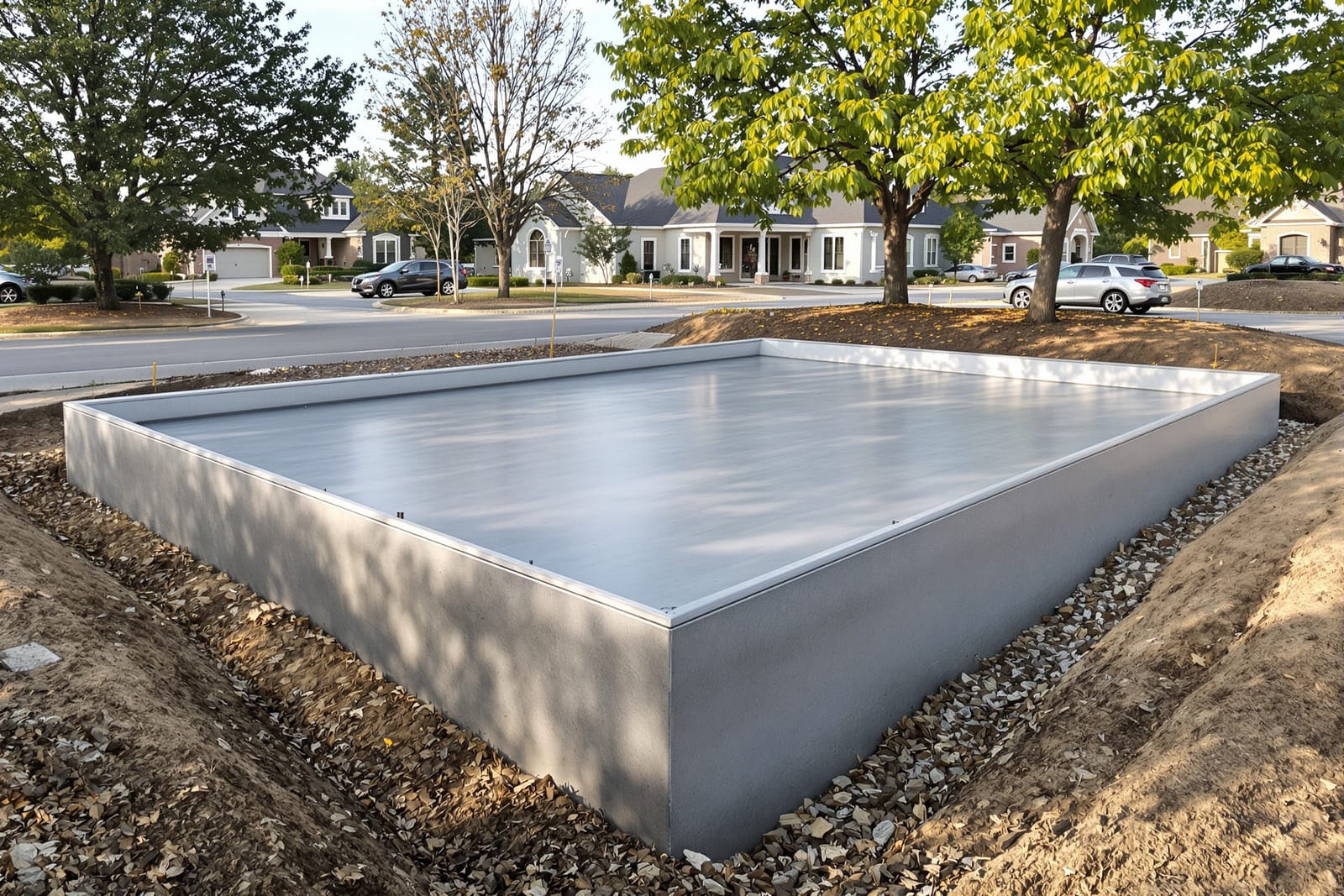
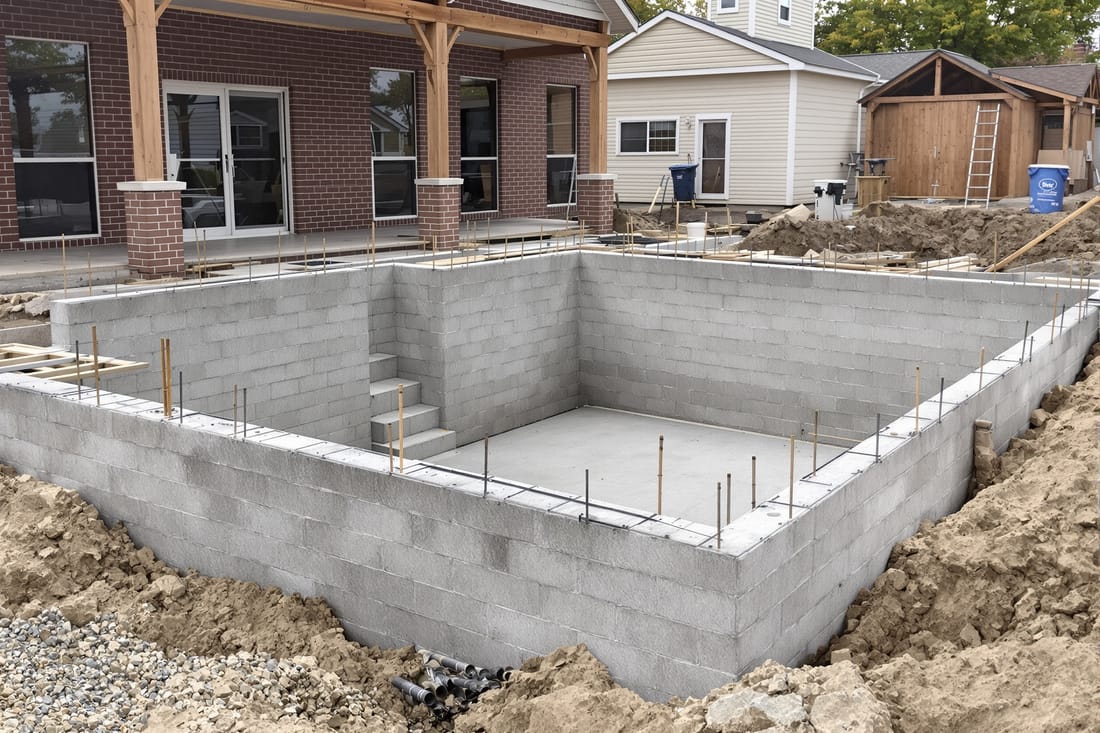
Our team installs commercial concrete foundations and footings for new construction projects throughout Brooklyn, NY. We handle excavation, rebar placement, and concrete placement for footings, grade beams, and structural slabs, following engineering plans to support buildings safely and efficiently.
Superior Concrete Brooklyn provides professional commercial concrete foundations throughout Brooklyn, NY, New York and the surrounding area. Our licensed, insured crew delivers safe, clean, on-time work with a free estimate before anything begins. Call (718) 313-3878 or request your free quote.
Commercial Concrete Foundations in Brooklyn Built for Real-World Loads
When your building, warehouse, or retail space depends on its foundation, you cannot afford guesswork. Superior Concrete Brooklyn designs and installs commercial concrete foundations and footings that match your actual load demands, soil conditions, and building use, not a generic template.
Our team focuses on the structures that keep Brooklyn businesses running: mixed-use buildings, small commercial towers, retail plazas, restaurants, industrial spaces, and multifamily projects. We coordinate closely with your architect, structural engineer, and GC so that rebar layouts, anchor locations, slab thickness, and footing sizes all work together and match stamped drawings.
From the first walk of your site, we look at truck access, neighboring properties, and existing utilities to plan where pumps, forms, and rebar will go. Tight Brooklyn lots, shared driveways, and busy sidewalks change how foundation work must be staged, and our crews are used to operating in these conditions. You get a foundation that is not only structurally sound but also built with realistic logistics and schedule in mind.
How We Plan and Design Commercial Concrete Foundations
Every successful commercial concrete foundation in Brooklyn starts with investigation and coordination. Before we pour a yard of concrete, Superior Concrete Brooklyn walks you through:
• Soil and subgrade review: We review your geotechnical report if you have one, or advise you to obtain one for anything larger than a small addition. Brooklyn soil can vary a lot in short distances, from fill materials to clay pockets and areas with a high water table. This affects footing depth, width, and whether you need over-excavation and compacted fill.
• Foundation type selection: Depending on your building size and engineer’s design, we install spread footings, thickened edge slabs, mat foundations, combined footings, grade beams, or pier and grade beam systems. For interior loads, we often install isolated pad footings under columns with specific rebar cages.
• Coordination with structural drawings: We carefully review your S-sheets (structural plans) to confirm concrete strength (typical commercial mixes in Brooklyn are 3,500 to 5,000 psi), rebar sizes and spacing, embed plate locations, and anchor bolt layouts. We mark these on site so there is no confusion during the pour.
• Code and inspection requirements: New York City Building Code sets specific requirements for concrete strength, frost depth, reinforcement, and controlled inspections. We plan for special inspection visits, concrete cylinder sampling, and any pre-pour checks required so your project passes without delays.
Step-by-Step: Our Commercial Foundation and Footing Installation Process
Superior Concrete Brooklyn follows a clear process so general contractors and owners know exactly what is happening at each stage.
1. Layout and excavation: Working from survey control points, we snap lines and mark footing edges, pier centers, and slab boundaries. Our excavation crew removes soil to the required depth, accounting for frost line, bearing capacity, and any over-excavation specified by the engineer. Excavation spoils are either stockpiled neatly or hauled off, depending on site limits.
2. Subgrade preparation and base: We level and compact the subgrade with plate compactors or rollers, then place a compacted gravel base (often 4 to 8 inches of crushed stone) where specified. In areas prone to moisture, we add a vapor barrier under slabs that will receive flooring.
3. Formwork and edge containment: We build forms for strip footings, piers, and grade beams using sturdy form boards, steel stakes, and bracing. On Brooklyn infill lots, we often must work very close to adjacent structures, so we use tight forming systems and sometimes shoring to protect neighboring buildings.
4. Reinforcement placement: Our ironworkers install rebar cages, dowels, and mats following the structural drawings. We use rebar chairs and ties to maintain the proper cover and spacing, and we place additional bars at column locations, corners, and load transfers where stress is highest.
5. Concrete placement and finishing: We schedule ready-mix trucks to match site access and pour sequence. Where trucks cannot reach, we use a concrete pump to place the mix accurately. During placement, we consolidate concrete with vibrators to eliminate voids, then strike off and screed to the required elevation. For slabs, we finish surfaces to match their use, such as troweled for interior retail or lightly broomed for exterior walkways.
6. Curing and protection: Correct curing is critical for long-term strength. We apply curing compound or use wet curing methods, and we protect fresh concrete from freezing, rapid drying, and construction traffic. We do not remove forms until the concrete has reached appropriate strength and passed any required inspections.
Foundation Options, Reinforcement, and Mixes for Different Commercial Uses
Commercial concrete foundations in Brooklyn are not one size fits all. Superior Concrete Brooklyn tailors reinforcement, thickness, and mix design to how your building will actually be used.
• Retail and mixed-use buildings: These typically use continuous strip footings under load-bearing walls, isolated pad footings under columns, and a slab-on-grade or structural slab. We coordinate anchor bolt patterns for steel columns and storefront framing so tenants can build out without surprises.
• Warehouses and light industrial: Heavier point loads from racking, equipment, and forklifts drive thicker slabs, denser rebar or welded wire reinforcement, and higher strength mixes. We also pay attention to joint layout to reduce curling and cracking under repeated traffic.
• Restaurants and food service: These spaces often require carefully sloped slabs for drains, thickened pads for coolers and kitchen equipment, and provisions for plumbing penetrations. We work around grease traps, floor sinks, and future trench drains so you do not have to cut and patch later.
Mix design matters as much as layout. We typically use air-entrained concrete for exterior footings and slabs that see freeze-thaw cycles and deicing salts, and non-air-entrained mixes for interior work. For some projects, owners request fiber-reinforced mixes to help control surface cracking, especially in high-use industrial spaces.
Costs, Scheduling, and Brooklyn-Specific Challenges
Cost for commercial concrete foundations in Brooklyn depends on more than just square footage. Superior Concrete Brooklyn explains the drivers so you can budget realistically and avoid surprises.
Key cost factors include:
• Excavation depth and haul-off: Deeper foundations, high water tables, or the need to remove unsuitable fill add excavation time and disposal fees. Tight city access can mean smaller equipment and more truck trips.
• Reinforcement and complexity: Heavy rebar mats, dense column footing cages, and heavily loaded grade beams increase labor and material. Complex anchor layouts or embeds for machinery also add coordination time.
• Concrete strength and additives: Higher psi mixes, accelerators for cold weather, or special admixtures for chemical resistance cost more but may be required by your engineer or use case.
Brooklyn projects often face specific challenges such as working within narrow lots, coordinating with neighboring buildings that share party walls, and dealing with underground utilities or old foundations. Our team is used to early-morning pours to avoid traffic, sidewalk protection, and building within Department of Buildings rules and DOT permits.
Weather is another real factor. In winter, we plan for heated enclosures, ground thaw blankets, and non-chloride accelerators so the concrete gains strength correctly and does not freeze. In summer, we adjust scheduling to avoid the hottest parts of the day, increase curing attention, and sometimes use retarding admixtures to keep the mix workable.
What Brooklyn Owners Should Know Before Hiring a Foundation Contractor
Choosing a contractor for commercial concrete foundations is one of the most important decisions on your project. Superior Concrete Brooklyn encourages owners and GCs to ask detailed questions, even if you do not hire us.
Ask to see sample structural foundation plans from past jobs that are similar in scale to yours, along with photos of those projects during the foundation phase. A real commercial foundation contractor should be comfortable explaining rebar details, inspection processes, and how they protect neighboring properties during excavation.
Confirm that the contractor understands NYC DOB procedures, controlled inspections, and special inspection requirements for concrete, rebar, and bolted connections. Ask how they schedule inspections to avoid delaying pours and whether they work with particular inspection agencies.
Get clarity on how changes are handled. In commercial work, field conditions often do not match the drawings. Maybe you encounter an unknown old footing or a utility in the way of a pier. Your contractor should be able to propose solutions, coordinate with your engineer, and document the change in a straightforward way.
Finally, ask about crew size and supervision. Commercial foundations move quickly, and you want a dedicated foreman on site who understands the structural drawings and can make real-time decisions. At Superior Concrete Brooklyn, our foremen have hands-on experience in both forming and placing, which helps prevent small layout errors from turning into costly structural issues later.